For cookware manufacturers and hardware buyers, selecting the right aluminum weld studs directly affects handle assembly stability, welding yield and long-term product safety. Together with aluminum rivets and aluminum nuts, aluminum weld studs form the core lineup of aluminum cookware spare parts. Many purchasers struggle to distinguish pure aluminum weld studs from aluminum alloy weld studs, and match proper grades to different cookware production lines. This article breaks down their core differences, mainstream grades and recommended application scenarios.
What Is Pure Aluminum Weld Rivet?
Pure aluminum weld rivets belong to the series with aluminum content above 99.0%. The most widely used grades are 1050 and 1060. They feature superior ductility, excellent thermal conductivity, stable stud welding performance and outstanding corrosion resistance against food-grade weak acid and alkaline cooking environments. The downside is relatively low tensile strength and hardness.
Pure aluminum weld nuts melt evenly during capacitor discharge stud welding, producing smooth, crack-free welding joints. They match perfectly with pure aluminum cookware bodies, avoiding galvanic corrosion caused by inconsistent base metal materials.
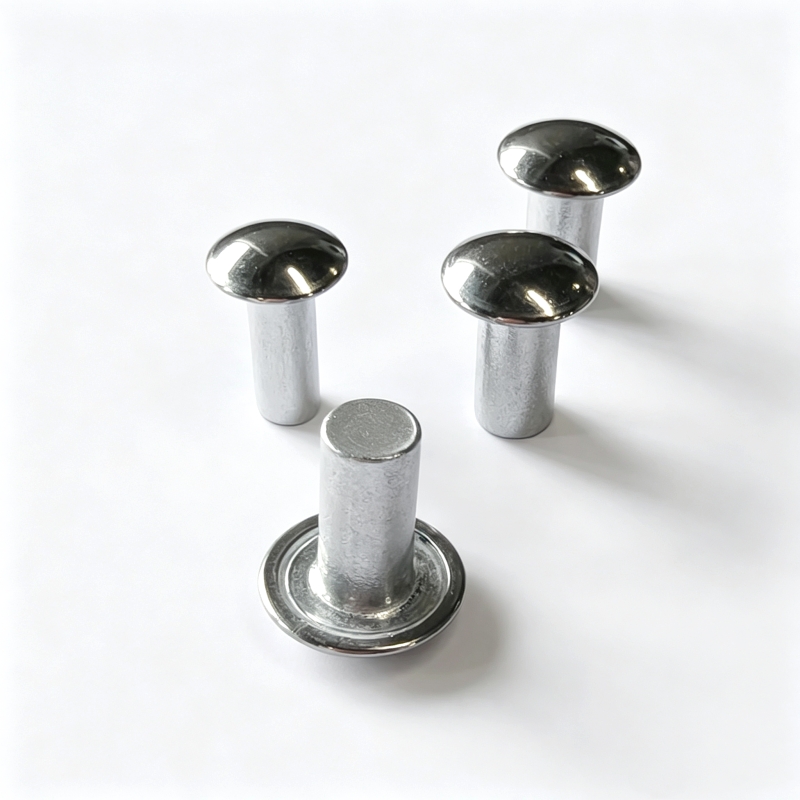
Main Grades & Scenarios
- 1060 Pure Aluminum Weld Stud Aluminum content ≥99.6%, the most popular grade for standard aluminum cookware. It is the preferred option for lightweight aluminum frying pans, saucepans and stockpots with ordinary load requirements. It works well for fixed handle welding on thin-gauge aluminum pots and matches common aluminum rivets and aluminum nuts for full cookware spare parts kits.
- 1050 Pure Aluminum Weld Stud Aluminum content ≥99.5%, slightly better forming consistency. It is widely adopted for food-contact cookware that requires strict sanitary standards, such as baby food pots and small milk pans.
What Is Aluminum Alloy Weld Stud?
Aluminum alloy weld studs add magnesium, silicon or other alloying elements. The mainstream grades for cookware are 5052 and 6061. Alloy upgrades greatly improve tensile strength, shear resistance and anti-deformation ability while retaining good weldability. Compared with pure aluminum studs, alloy studs can bear heavier dynamic loads and resist loosening under repeated high-temperature cycles.
Main Grades & Scenarios
- 5052 Aluminum Alloy Weld Stud 5052 is an Al-Mg alloy with balanced strength and corrosion resistance. It is the top choice for heavy-duty cookware, including deep woks, commercial catering pots and thick-bodied pressure cookers. When paired with reinforced aluminum nuts and heavy-duty aluminum rivets, it can withstand frequent lifting, vibration and high-temperature alternating use in commercial kitchens.
- 6061 Aluminum Alloy Weld Stud 6061 (Al-Mg-Si) offers higher structural strength and good threading performance. It is commonly used for threaded weld studs that need repeated assembly and disassembly, suitable for removable cookware handle structures and custom modular aluminum cookware spare parts.
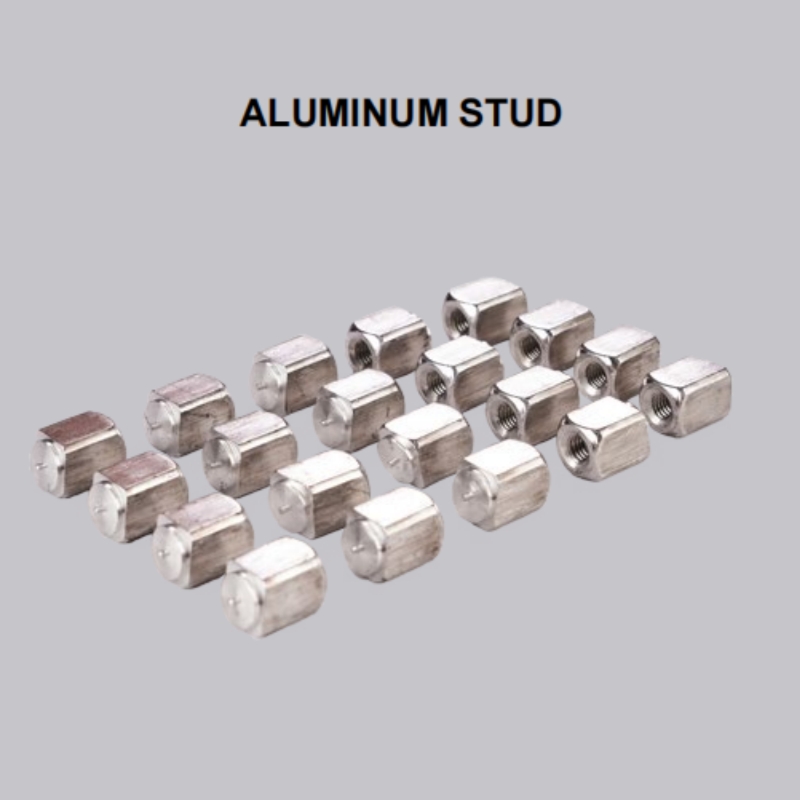
Core Comparison: Pure Aluminum Weld Stud VS Aluminum Alloy Weld Stud
| Item | Pure Aluminum Weld Stud (1050 / 1060) | Aluminum Alloy Weld Stud (5052 / 6061) |
|---|---|---|
| Strength & Hardness | Low, soft, easy to deform under heavy load | High, anti-shear, anti-loosening |
| Welding Compatibility | Best for pure aluminum pot body | Good for alloy aluminum / thick composite pot body |
| Corrosion Resistance | Excellent for mild kitchen environment | Good, better for heavy-use commercial scenarios |
| Typical Matching Parts | Standard aluminum rivets, plain aluminum nuts | High-load aluminum rivets, thick-flange aluminum nuts |
| Cost | Lower | Slightly higher |
How to Choose for Aluminum Cookware Production
- Pick 1060 pure aluminum weld studs for mass production of regular household aluminum pans, lightweight saucepans, and standard aluminum cookware spare parts packages with aluminum rivets and aluminum nuts. It guarantees stable welding and controls procurement cost.
- Choose 5052 alloy weld studs for commercial cookware, woks, pressure cookers and products that require heavy load and long service life.
- Select 6061 alloy weld studs if you need threaded studs for detachable handles and after-sales replacement of aluminum cookware spare parts.
Complement with Aluminum Rivets and Aluminum Nuts in Cookware Assembly
Aluminum weld studs are not used alone. In most cookware production lines, manufacturers combine them with aluminum rivets for permanent handle fastening and aluminum nuts for threaded locking. This combination delivers flexible assembly solutions: rivets for permanent fixation, weld studs + nuts for detachable structures. All these fasteners are categorized as aluminum cookware spare parts, available for bulk OEM and after-market replacement.
Post time: Nov-21-2026