Cookware manufacturers rely on capacitor discharge (CD) aluminum weld studs to fasten Cookware handles, lid knobs and support brackets onto aluminum pan bodies. Not all aluminum studs perform equally; premium cookware grade studs combine matched aluminum alloy, food‑safe compliance and the special recessed annular groove on the welding end, greatly lowering reject rates in mass production.
For kitchenware, the top recommended grades are 5052, 5754 and 5356 aluminum‑magnesium alloys. Unlike common 6061 or 1100 aluminum, these 5‑series grades feature balanced corrosion resistance, stable weldability and excellent compatibility with spun or deep‑drawn aluminum cookware substrates. 5052 is widely used for standard aluminum pots and frying pans, while 5754 and 5356 offer higher shear strength and better resistance to repeated heating, dishwashing and acidic food contact. For cookware, alloy matching is critical: mismatched grades easily create brittle welds, hidden porosity or detachment after thermal cycling. All raw material must meet food contact standards such as LFGB, FDA or local food‑safe regulations for kitchen products.
The core application scenario is thin‑gauge aluminum cookware, usually 1.0–3.0 mm sheet, including non‑stick frying pans, saucepans, stockpots and lids. CD stud welding finishes within milliseconds, limiting heat input so it will not burn through thin aluminum or damage pre‑applied non‑stick coatings. This makes it ideal for automated cookware assembly lines, where consistent pull strength and zero backside marks are mandatory.
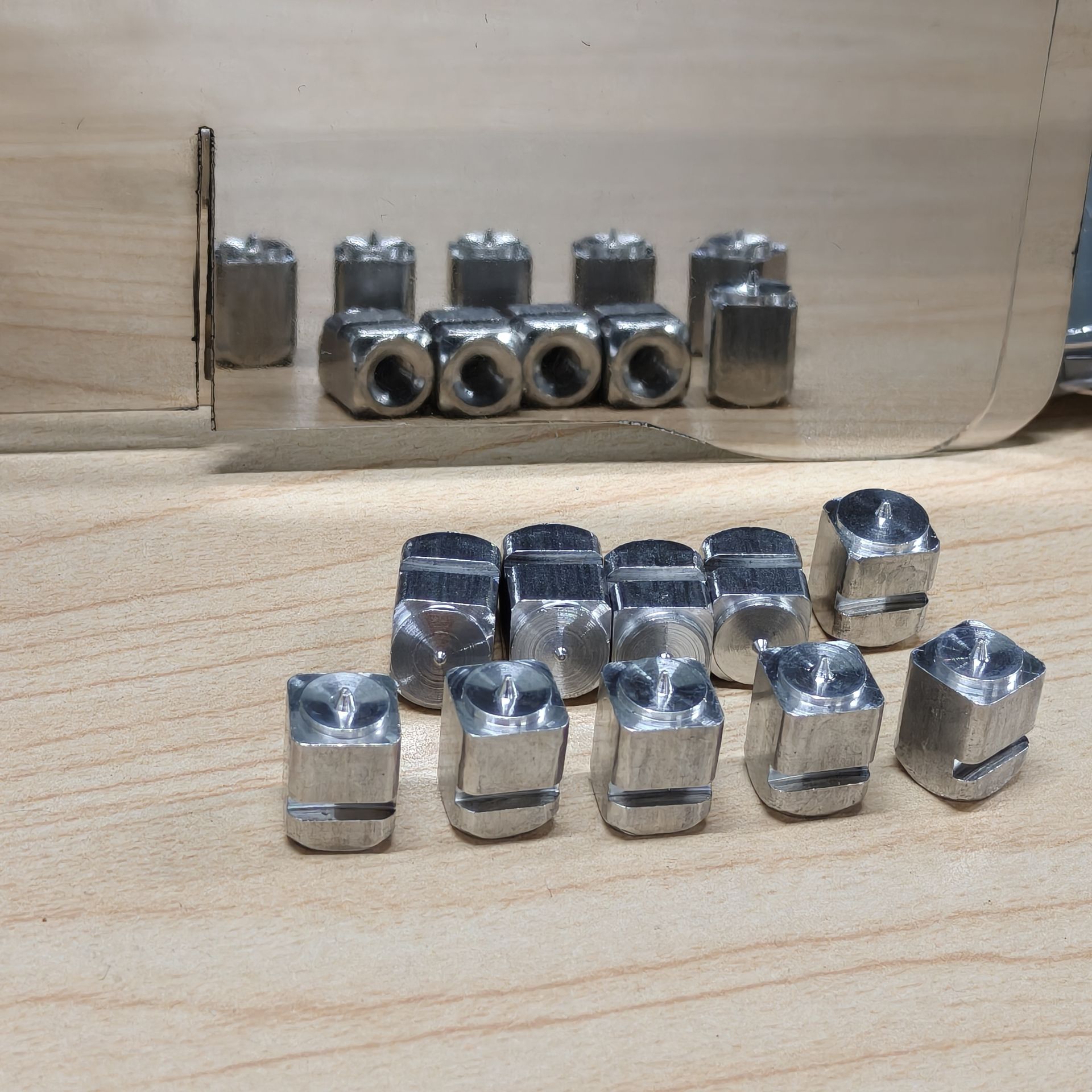
The most recognizable premium feature is the recessed ring groove machined around the welding face. Aluminum forms a tough, insulating oxide layer and conducts heat extremely fast; a flat stud end often causes wandering arcs, incomplete fusion and trapped gas. The annular recess constrains the arc into a controlled circular zone, breaking the oxide film reliably and forming a uniform ring‑shaped fusion zone. The cavity also acts as a reservoir for squeezed molten aluminum, preventing flash, tilted studs and stress concentration at the weld toe. This design widens the usable welding parameter window, improving consistency even with slight variations in sheet surface and machine pressure.
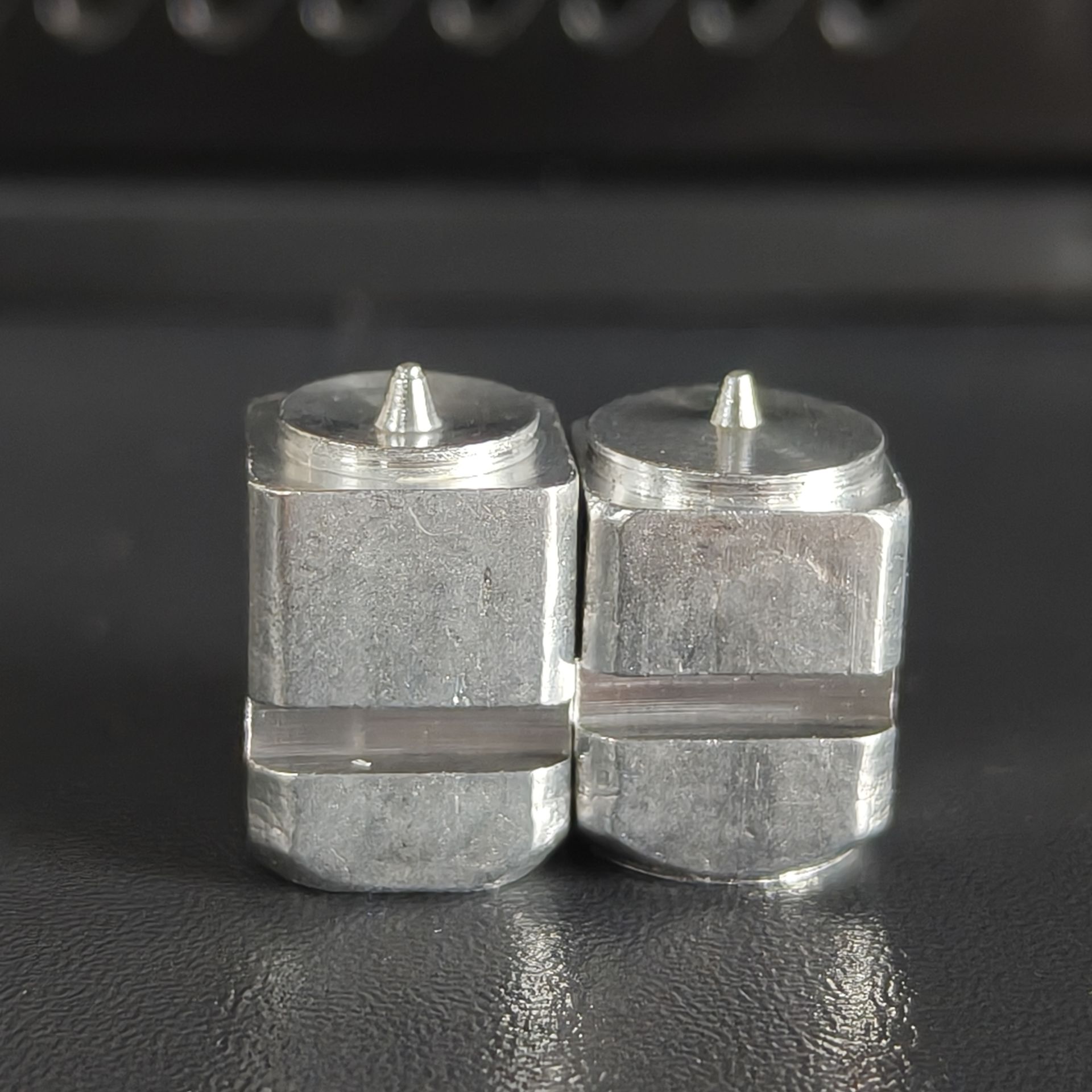
Manufacturers should avoid low‑cost general aluminum studs without the precision recessed groove. While they may weld occasionally, they produce far more invisible cold joints that fail after heating cycles. High‑quality cookware aluminum weld studs maintain tight dimensional tolerance, clean grain structure and the standardized recess profile.
In summary, the ideal cookware aluminum weld stud uses food‑approved 5‑series aluminum alloy, matches the base pan material, and adopts the engineered recessed welding face. This combination ensures safe, durable and repeatable CD welds for premium aluminum kitchenware.
Post time: Nov-09-2026