Introduction
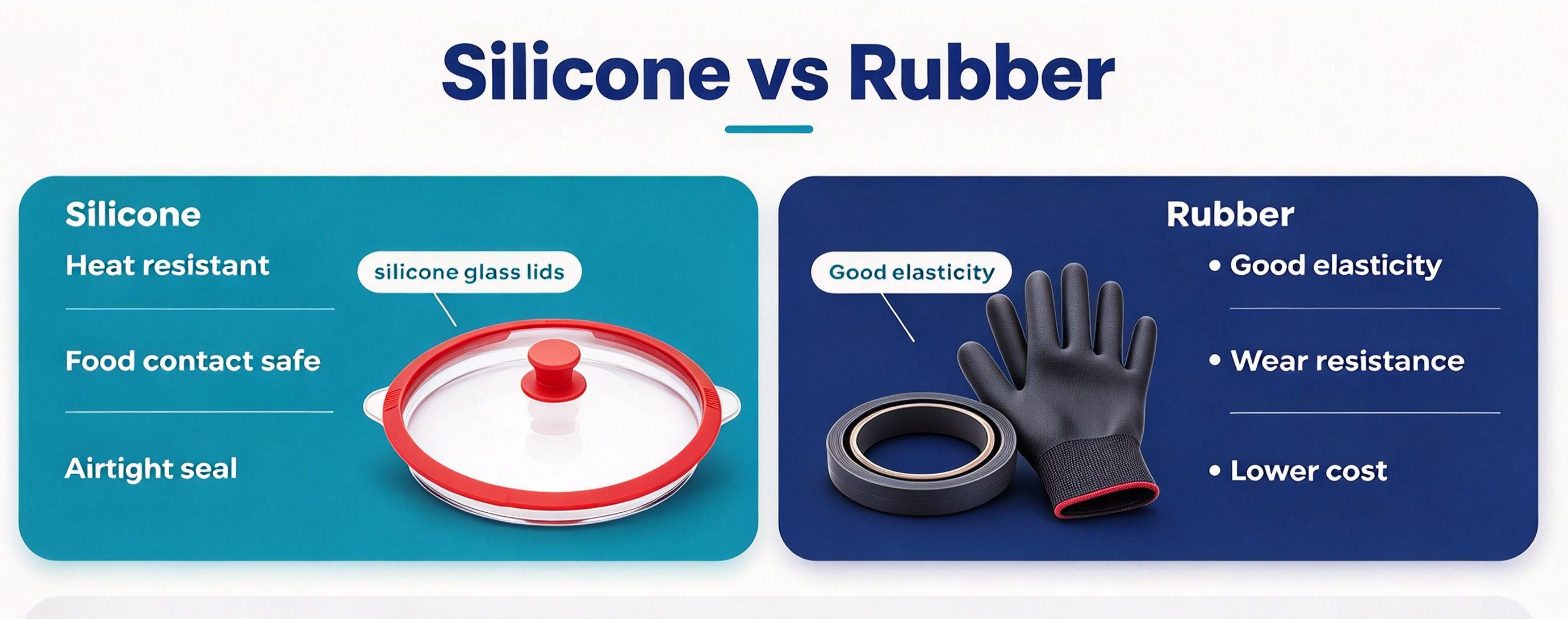
Silicone and rubber are both flexible elastomers widely used across consumer goods, kitchenware, automotive and industrial manufacturing. Many buyers confuse these two materials and wonder which one fits their product design. Although both can stretch, seal and absorb shock, their chemical composition, temperature tolerance, aging resistance and safety performance are quite different. This guide compares silicone and rubber in detail, and introduces typical applications including silicone parts and silicone glass lids to help you select the proper elastomer for your project.
What Is Rubber?
Rubber includes natural rubber harvested from rubber tree latex and multiple synthetic rubber types such as nitrile, neoprene and EPDM. Its molecular backbone is carbon-hydrogen based. Pros of rubber
- Excellent tensile strength, tear resistance and abrasion performance
- Superior dynamic rebound, perfect for heavy friction and impact scenarios
- Lower raw material cost compared with silicone material
- Good oil resistance for certain synthetic rubber grades like nitrile rubber
Cons of rubber
- Poor high-temperature resistance; easy to harden, crack or deform under continuous heat
- Vulnerable to UV light and ozone exposure, leading to fast aging
- Natural rubber may trigger latex allergies
- Not suitable for long-term direct contact with high-temperature food
What Is Silicone?
Silicone (silicone rubber) is a synthetic elastomer built on silicon-oxygen molecular chains. It belongs to a special family of elastomers, different from carbon-based rubber. Food-grade silicone can pass FDA and LFGB food contact certifications. Pros of silicone
- Wide temperature range: stable from -60°C up to 250°C
- Outstanding UV and ozone resistance, long service life for outdoor use
- Non-toxic, odorless, hypoallergenic, safe for food and medical contact
- Stable chemical property, good insulation performance
- Easy to mold into custom silicone parts with complex shapes
Cons of silicone
- Lower tear and abrasion resistance than natural rubber
- Higher material cost
- Not ideal for heavy oil immersion environments
Silicone Applications
Silicone dominates high-temperature, food-safe, long-lifespan scenarios. Custom silicone parts are manufactured for kitchen, medical, electronic and aerospace sectors.
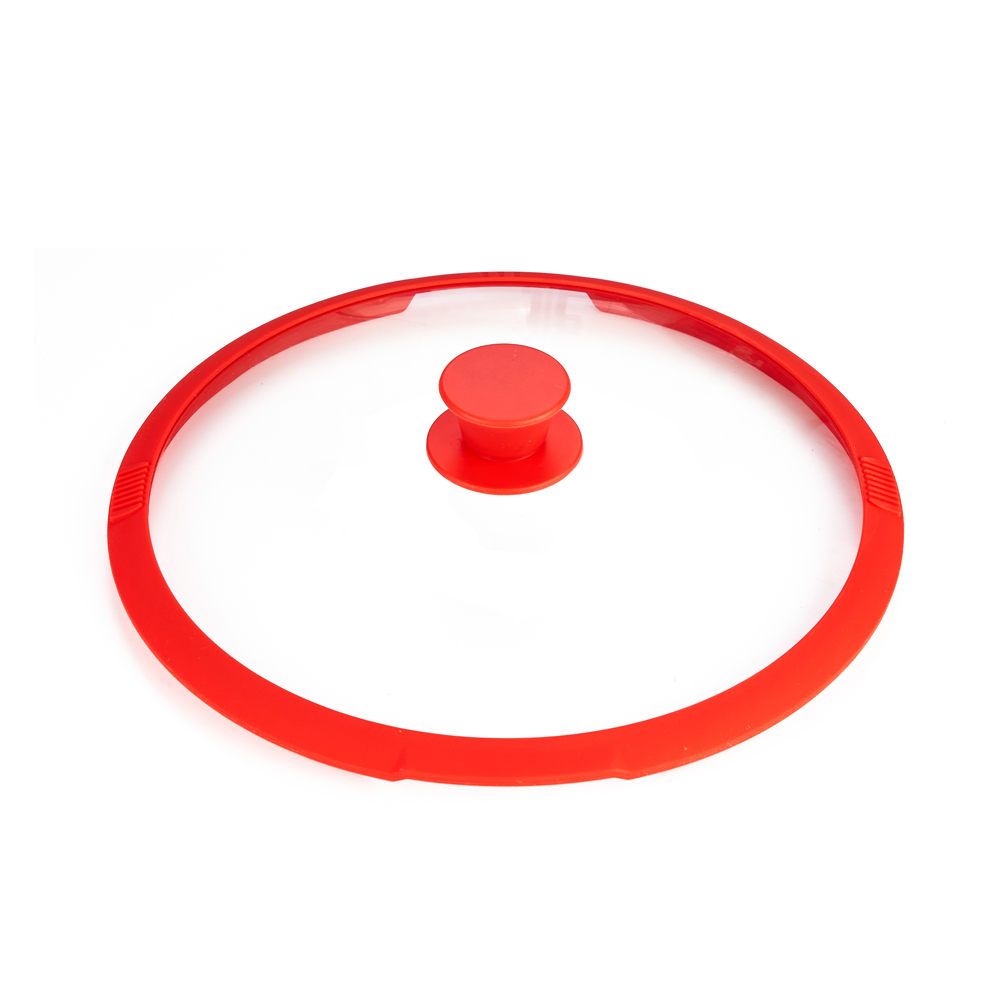
- Kitchenware: silicone glass lids . They are one of the most popular silicone household products. These lids combine tempered glass and food-grade silicone rim. The silicone ring creates an airtight seal between the lid and pot, tolerating high heat from stoves, steam and microwave use. Silicone glass lids are dishwasher safe, won’t melt or release harmful substances under cooking heat, and are widely used for pots, pans and food storage containers.
- Custom silicone parts Manufacturers produce various silicone parts such as silicone sealing gaskets, silicone buttons, silicone tubing, protective sleeves and valve components. These silicone parts are widely used in home appliances, medical devices, electronics and food machinery. Custom silicone parts can be molded into diverse sizes and shapes to meet OEM & ODM requirements.
- Other silicone uses
- Baking mats, food storage seals, baby products
- Medical tubing, sterile seals
- Outdoor lighting gaskets, cable insulation
Core Differences Between Silicone and Rubber
| Item | Rubber | Silicone |
|---|---|---|
| Molecular structure | Carbon-hydrogen chain | Silicon-oxygen chain |
| Temperature resistance | Medium; cannot sustain high heat | Excellent, wide temperature range |
| Anti-aging / UV | Poor, ages quickly outdoors | Excellent, resistant to ozone and UV |
| Food safety | Limited grades only | Food-grade options available |
| Mechanical strength | High tensile & tear strength | Moderate strength |
| Cost | Lower | Higher |
| Allergy risk | Natural rubber has latex allergy risk | Hypoallergenic |
Common Application Scenarios
Rubber Applications
Rubber is selected when mechanical wear, strong elasticity and budget control are priorities.
- Automotive tires, engine mounts, shock-absorbing pads
- Nitrile rubber seals for fuel and oil pipelines
- Industrial conveyor belts, vibration dampers
- Latex disposable gloves
How to Choose Between Silicone and Rubber ?
Pick rubber if your product needs heavy abrasion resistance, strong dynamic elasticity and tight cost control, and it will not work under persistent high heat or direct food contact.
Pick silicone if your product faces high or fluctuating temperatures, outdoor UV exposure, food contact requirements, or needs stable sealing for years. For kitchen cookware accessories such as silicone glass lids, or customized industrial silicone parts, silicone is the preferred material.
Conclusion
Silicone and rubber serve different engineering needs. Rubber delivers robust mechanical performance at a lower price, while silicone excels in extreme temperature stability, anti-aging and food safety. When sourcing cookware accessories, silicone glass lids rely on food-grade silicone for reliable heat-resistant sealing. For industrial and consumer custom components, silicone parts offer flexible, durable solutions that rubber cannot match in high-heat environments. Correct material selection improves product lifespan, safety and user experience.
Post time: Oct-10-2026