As a common raw material for SS cookware handle, grade 430 ferritic stainless steel dominates mid-range cookware accessory manufacturing for balanced cost and physical performance. Its prominent advantages include decent high-temperature resistance to sustain short-term cooking heat up to 450℃, effectively avoiding thermal deformation during stove usage. Without expensive nickel composition, 430 cuts raw material cost sharply versus 304 stainless steel and boasts good mechanical rigidity for handheld bearing. Natural chromium content forms passive anti-rust film to block daily humid kitchen corrosion, matching basic rustproof requirements for pot handles.
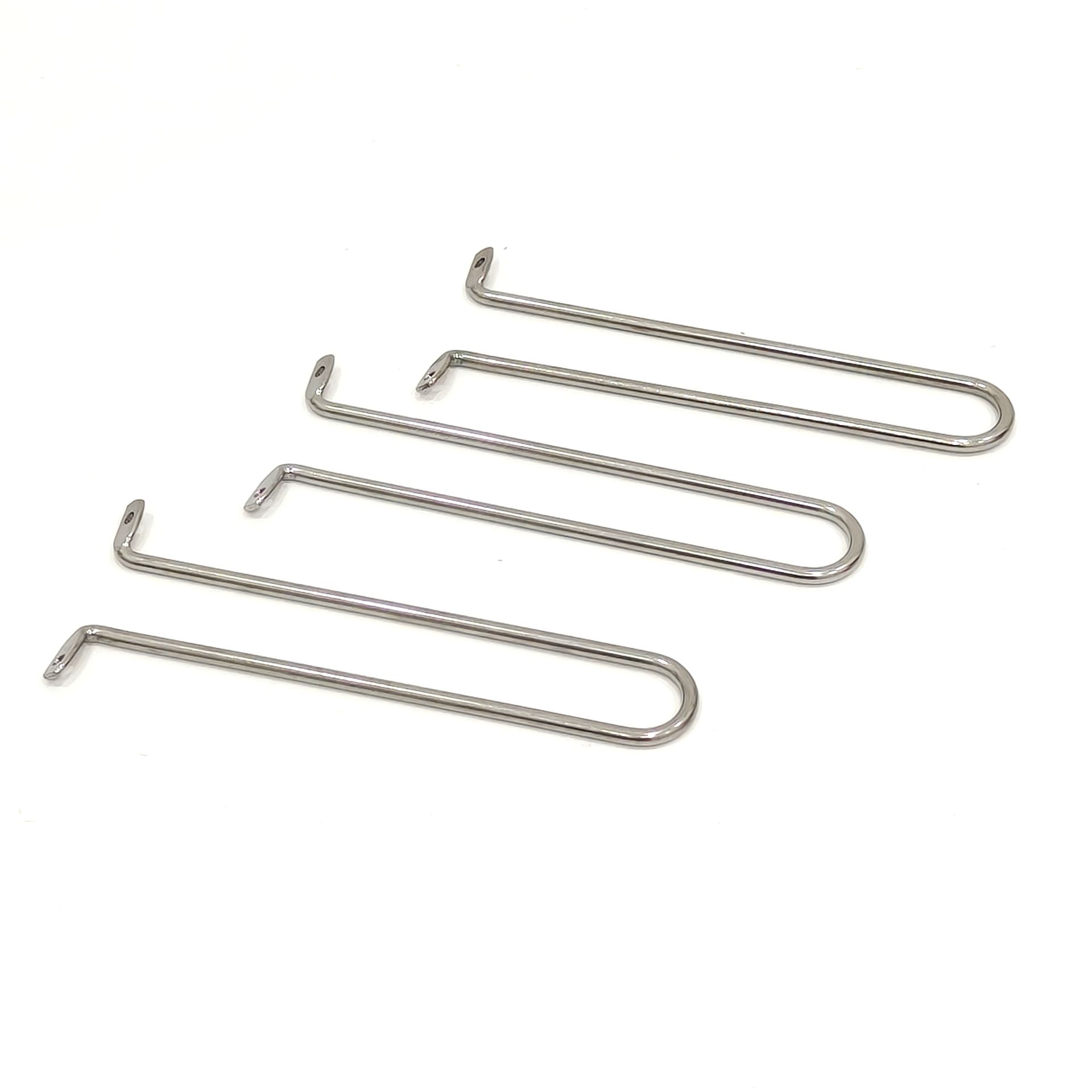
However, inherent drawbacks restrict high-end application. Its ferritic structure brings obvious magnetism and inferior corrosion resistance against long-term salty, acidic soup residue; prolonged soak triggers local rust spots easily. Poor high-temperature ductility leads to cracking risks under excessive stamping pressure.
Popular surface finishes for SS cookware handle cover hairline polishing and 8K mirror finishing with protective film lamination. Standard production flows contain blank cutting, precision stamping, edge deburring, high-temperature shaping, surface polishing and final protective film wrapping. Core manufacturing difficulties concentrate on uniform polishing consistency: thin cookware handle blanks tend to bend during grinding, while mirror finish requires multi-stage fine buffing to eliminate tiny scratches, greatly lowering finished product yield. Strict temperature control is also essential to prevent thermal stress deformation in formed handles.
Focusing on SS cookware handle mass production, AISI 430 ferritic stainless steel brings multiple inherent processing obstacles throughout fabrication.
First, poor room-temperature ductility easily causes cracking during stamping and bending. 430’s ferritic crystal structure lacks nickel for toughness; thin handle blanks frequently split at curved corners under cold forming, raising scrap rate noticeably. Pre-annealing adds extra production cost to improve plasticity.
Second, consistent surface finishing is challenging for hairline or mirror treatments. The material’s uneven surface hardness leads to inconsistent polishing traces. Thin-walled handles deform under grinding pressure, making uniform 8K mirror or even hairline texture hard to achieve in bulk batches.
Third, welding reliability with cookware bodies remains tricky. High chromium segregation at welding zones triggers chromium depletion, resulting in weak corrosion resistance and easy rusting around joints after long-term kitchen use. Excessive welding heat also deforms finished handles.
Besides, unstable rust resistance under humid, acidic kitchen environments is a persistent hidden defect. Natural passive film on 430 breaks down against salty food residue, requiring extra surface protection procedures to meet anti-rust standards for cookware accessories.
Post time: Jun-02-2026