On January 8, the Chinese Ministry of Finance and the State Taxation Administration jointly issued the “Announcement on Adjusting the Export Tax Rebate Policy for Photovoltaic and Other Products,” clearly stating that starting from April 1, 2026, the value-added tax (VAT) export tax rebate for photovoltaic and other products will be abolished.
According to the product list released (see the list at the end of the article), this adjustment covers a wide range of products, with as many as 56 categories related to glass. The announcement also specifies that for products on the list subject to consumption tax, the export consumption tax policy remains unchanged and will continue to apply the consumption tax rebate (exemption) policy. With less than three months of “grace period” from the policy announcement to its implementation, this change undoubtedly sends a significant shock wave through the glass industry, which has long relied on export tax rebates as a profit moat. This is not merely a subtraction of numbers on financial statements but a race against time that will force a deep-seated restructuring and transformation of the industry.
Facing the Pain: Extreme Compression of Profit Margins
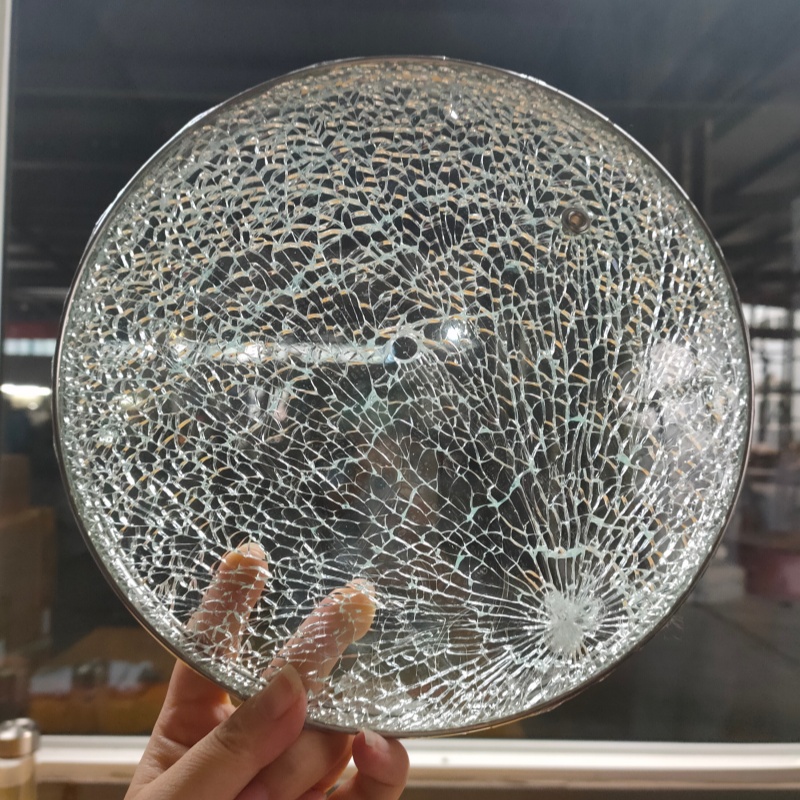
In international trade, export tax rebates essentially allow exported goods to enter the global market at prices excluding domestic circulation taxes, thereby enhancing the price competitiveness of domestic products. Reviewing historical policies, in 2010, export tax rebates were abolished for 26 categories of glass and glass products. In 2015, the rebate rate for fused quartz or other fused silica products was adjusted to 9%. In 2018, the rebate rate for 49 categories of glass products was increased, with some reaching up to 16%. In 2020, the rebate rate for 19 categories of glass products was raised to 13%. including Tempered Glass Lids for Aluminum pan. In 2024, the rebate rate for 88 categories was reduced from 13% to 9%.
For the glass industry, rebates often constitute a vital component of their narrow profit margins. This adjustment involves 56 glass categories, covering multiple tariff codes ranging from flat glass for construction, glass for aerospace, vehicles, and ships, to certain laboratory and daily-use glass products. This means that starting from April 1st, businesses exporting these products will no longer be eligible for the previously applicable tax rebates.
The industry concentration will further increase.
Any adjustment of macro policies is a reshaping of the industry pattern. The cancellation of export rebates is no different from a powerful measure of “supply-side reform”.
Elimination of backward capacity: Those small and medium-sized glass enterprises with backward production technology, high energy consumption, serious product homogeneity, and mainly relying on rebates to maintain operation will face a huge survival crisis. Within the three-month grace period, if they cannot reduce costs through technological upgrading, they will be ruthlessly eliminated by the market. The advantages of leading enterprises are highlighted: In contrast, leading enterprises with the advantages of scale effect, technological barriers, and integrated industrial chains, have stronger cost digestion and risk resistance capabilities. The industry concentration will further increase, and resources will be concentrated on high-quality production capacity.
The glass industry can no longer be obsessed with seizing market share by lowering prices. This policy adjustment will force enterprises to undergo strategic transformation: the product structure will shift from “commodity” to “high value”: enterprises will be compelled to reduce the export proportion of ordinary glass and instead increase R&D investment in high-tech and high-value-added products such as special glass and smart glass. These products, due to their irreplaceability, have stronger say and pricing power in the international market.
Transition from an “inward competition” based on cost to one based on “technology and green development”: In the past, domestic glass enterprises often engaged in price wars to compete for overseas orders, resulting in “water flowing to others’ fields”. After the cancellation of tax rebates, low-end price wars will be unsustainable, and industry competition will return to the quality of products and technical services themselves. Technological innovation will be used to reduce costs and increase efficiency, and create unique value. Coupled with the implementation of global carbon neutrality policies, building a green supply chain, and meeting the ESG requirements of global high-end customers, a new market entry barrier will be formed.
Our factory would follow the policy with government, and make the best to survive with customers.
Post time: Feb-09-2026